|
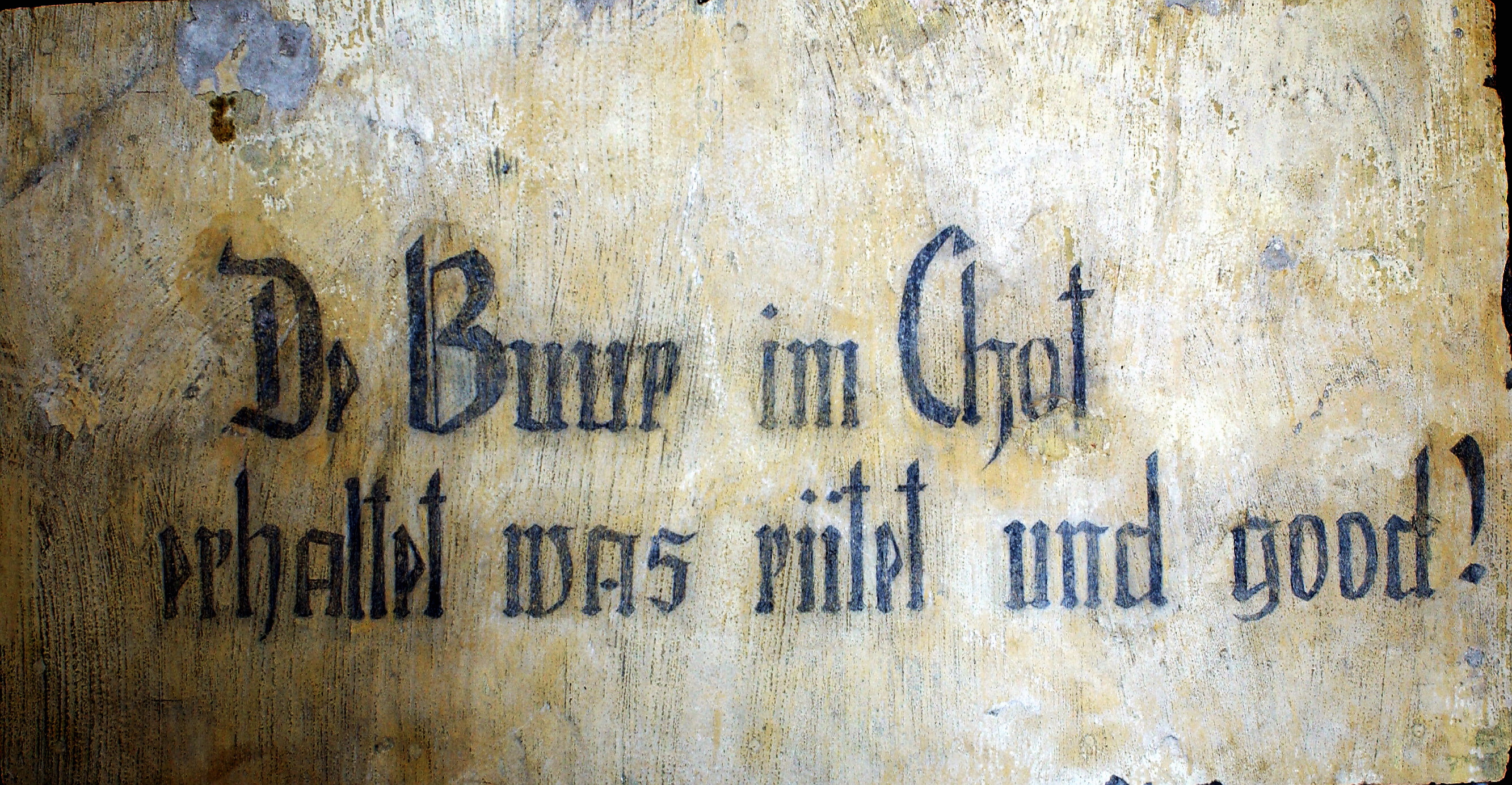
The sentence: "De
Buur im Chot erhaltet was riitet und good". has puzzled many
people who, over the years, have tried to translate it.
Initially it was
believed to be:
However,
in 2026 the puzzle was finally solved and, I am very grateful to Lorraine
Jones who wrote:
- It is a well
known traditional proverb amongst the German Swiss.
- Literally
it means "The farmer in his work clothes preserves what rides and
walks."
- It stems
from the Swiss Peasants War of 1653 and reflects the uprising linked
to social deprivation, esteem of agriculture and traditional ways
of life.
- It was apparently
coined by the locals of the Entlebuch valley and the rallying cry
used in various revolts.
- Its figurative
meaning and so actual translation is, "The farmer in his clothes keeps
what rides and walks"
i.e. That the working farmer / land worker keeps society going. Being
humble
- The correct
spelling and phrase should read: "De Buur im Chot erhaltet
was riited und good"
|